5 | 4738 views
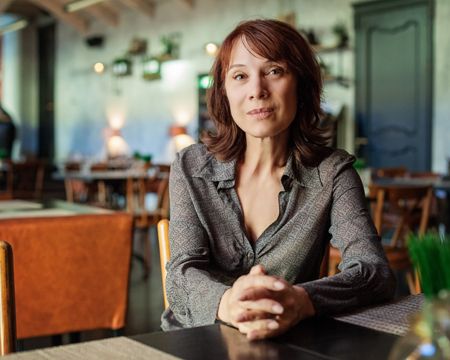
My name is Susanne. I’m 54 years old and work as an administrative assistant in a lmid-size town. After 22 years of marriage, I decided to leave my husband — a decision that took years to mature. At some point, we had become more roommates than a couple. And I no longer wanted to grow old with someone with whom I shared little more than a house.
The first months after the separation were difficult. Being alone felt unfamiliar, almost threatening. Suddenly there was silence: no one coming home in the evening, no one asking about my day. But at the same time, I felt an unexpected calm. I picked up things I had abandoned years ago — dance nights, hiking, a pottery course. I had to rediscover who I was when I wasn’t someone’s wife.
After about a year, I began to enjoy being single. I learned to keep myself company. Sundays stopped frightening me. I made good breakfasts, read the newspaper, listened to music. Sometimes I invited friends over. Sometimes I went to the cinema alone — something I had never dared to do before.
Still, a quiet longing surfaces now and then. I miss closeness — not necessarily a conventional relationship, but someone who truly knows me, with whom I can simply be. I had several online dates, even some lovely intimate encounters, but the experiences were sobering. Many men my age want validation rather than closeness. Some seek adventure, others an instant replacement for their ex. I want neither dependency nor superficial flirtation.
Today, I describe myself as a happy single with occasional melancholic moments. I’ve learned that happiness doesn’t depend on being part of a couple — though it’s human to long for connection. I’m not incomplete because I live alone. But sometimes I wish someone were there to see me fully.
Can Singles Be Happy?
First, it helps to clarify what “single” means: a person without a committed partner — regardless of whether they live alone or in shared arrangements. Not everyone living alone is single, and not every single lives alone. Many couples maintain separate households (“living alone, being together”) and still count statistically as single-person households.
Between Freedom and Longing
Singles can live just as fulfilled, happy, and meaningful lives as people in relationships. Happiness is not reserved for couples. However, many singles see their status as a transitional phase — a period of reorientation, recovery after a breakup, or a consciously chosen time of independence.
They enjoy the advantages: no explanations, spontaneous decisions, freedom from compromises about travel plans, eating habits, or décor. And perhaps most importantly, the space to rediscover parts of themselves that relationships often require them to mute.
Those who leave unhappy relationships often feel liberation first — the ability to breathe again. Only later do they discover whether this freedom remains enriching or whether, over time, the desire for closeness and tenderness returns.
The Psychology Behind It: Loneliness, Resilience, Self-Worth
Whether someone thrives as a single depends heavily on personal history and emotional resilience. Those who were left often suffer longer, while those who ended the relationship may feel relief or even euphoria at first. But eventually, everyone faces the same question: How well can I live with myself?
The ability to tolerate — or even enjoy — solitude is a key factor in mental health. Loneliness researchers speak of loneliness resilience: an inner stability that prevents solitude from feeling threatening. Some people experience being alone as a space for creativity and reflection; others quickly feel emptiness when social resonance fades.
Studies suggest that women tend to struggle more with loneliness in later life, often because they were socialized to define themselves through relationships, whereas men were taught independence. But this is changing. More women, like Susanne, are exploring new, self-determined life models beyond traditional relationship paths.
Long-Term Singles: Choice or Self-Protection?
Permanent singlehood is rarely a purely conscious decision. Often, it’s shaped by earlier emotional wounds — painful breakups, childhood neglect, controlling or manipulative family relationships. Those who learned early that closeness equals danger develop protective strategies that keep intimacy at a distance.
Some retreat into hyper-independence, others into constant activity, distraction, or emotional detachment. They protect their freedom — but sometimes at the cost of closeness. Still, for some, singlehood becomes a stable, fulfilling way of life. The key is whether it’s chosen or endured.
The Essential Question: Choice
Singles can absolutely live happy, meaningful lives — just as couples can. What matters is whether solitude feels self-directed or imposed. Those who know themselves, can allow closeness without losing autonomy, and become a good partner to themselves can lead deeply satisfying lives on their own.
Susanne puts it this way: “I’d rather be alone than in the wrong relationship — but I stay open to whatever comes. For me, happiness means not depending on someone to love me, but liking myself enough to love someone freely.”
Our author: Dr. med. Stefan Woinoff is a specialist in psychosomatic medicine and psychotherapy in Munich. As a psychodrama therapist, author, and relationship expert at 50plus-Club, he supports people in individual, couples, and group therapy sessions. He is part of the German Focus.de Experts Circle.
Photo: © artmim / stock.adobe.com
Editor, 12/04/2025


